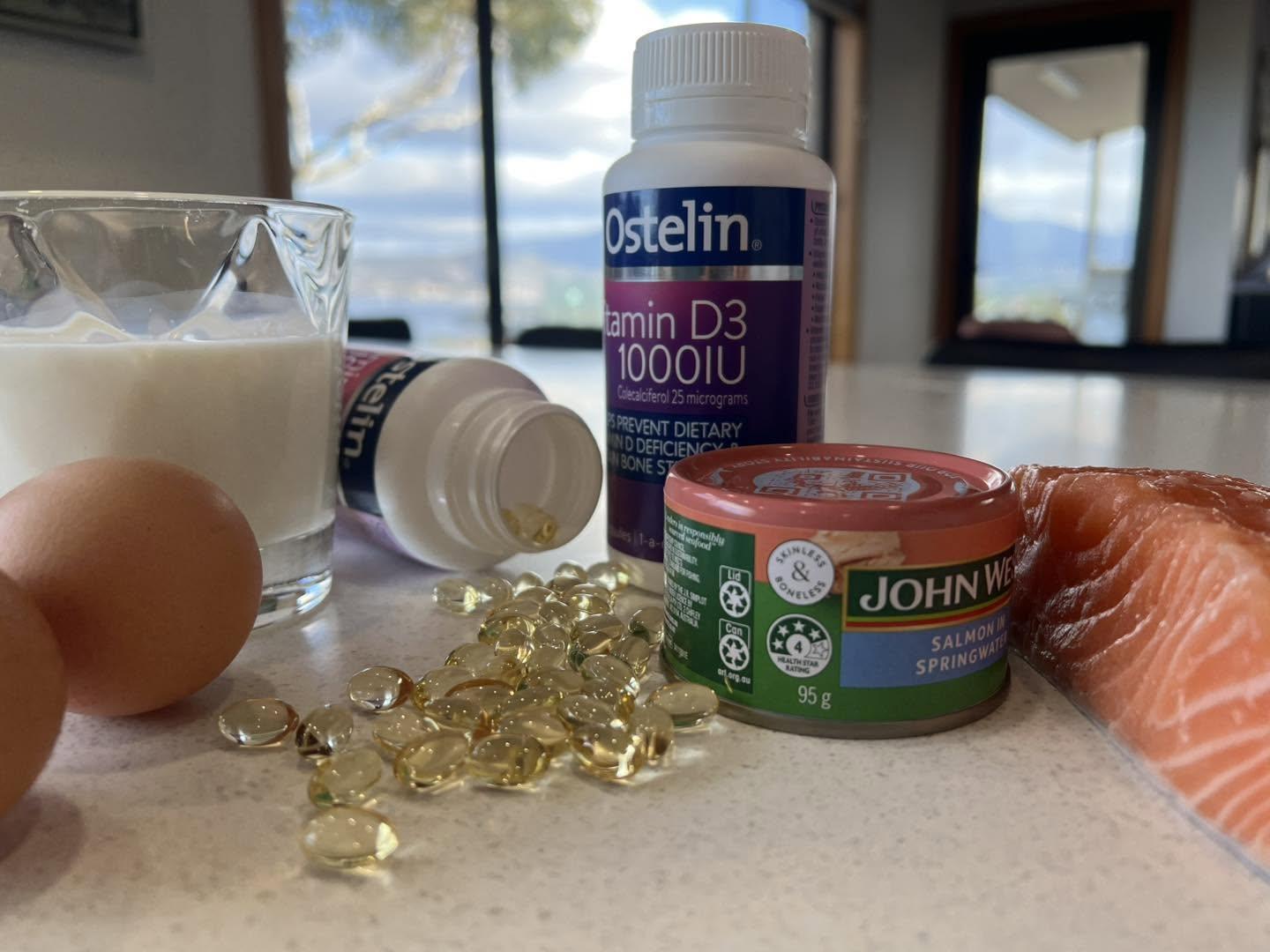
Vitamin D and Winter in Tassie
As the days get shorter and we spend more time indoors, winter is a common time for vitamin D levels to drop - particularly here in Tasmania, where low sunlight exposure during the cooler months increases the risk of deficiency.
Vitamin D is essential for:
- Strong bones and muscles
- Calcium absorption
- Healthy immune function
- General wellbeing
For many adults, a daily supplement of 1,000 IU (25 micrograms) of vitamin D3 is a reasonable maintenance dose through winter. This is particularly important if you spend most of your day indoors, have darker skin, cover your skin for cultural or medical reasons, or have previously been found to have low vitamin D levels.
Vitamin D can also be obtained from some foods, including oily fish such as salmon and mackerel, eggs, and vitamin D-fortified milk and dairy products. However, diet alone is often not enough to maintain adequate vitamin D levels during a Tasmanian winter.
If you have previously been diagnosed with vitamin D deficiency, or you've stopped taking your supplements for a period of time, a higher dose may be needed to rebuild your vitamin D stores. Treatment doses are often several times higher than maintenance doses and should be guided by your GP based on your individual circumstances and blood test results.
While safe sun exposure remains important, winter sunshine in Tasmania may not always be enough to maintain adequate vitamin D levels for everyone.
If you're unsure whether you need supplementation, or if you'd like to check your vitamin D status, see your GP at Glebe Hill Family Practice or GHFP Nurture to learn more.
#VitaminD #WinterHealth #Tasmania #PreventiveHealth #BoneHealth #HealthyAgeing #GeneralPractice #GHFP #GHFPNurture #HealthyWinter #FamilyMedicine #NutritionMatters